A Portal to Nowhere: How Successive UniMAC-IJ SRC Administrations Spent Over GHS17k on 404 Errors

Ama still remembers how getting a simple clarification from the Student Representative Council (SRC) was rarely simple. As a Level 300 student at the Ghana Institute of Journalism, now University of Media, Arts and Communication - Institute of Journalism, she would send messages on WhatsApp, make calls, and sometimes walk to SRC offices, all in search of updates and answers that were never available in one place. There was no central online platform where she, or any other student, could independently verify information. Years after she left campus, budget documents reviewed by The Unheard show that while students like Ama navigated a fragmented system, successive SRC administrations spent a combined GHS17,900 in student funds on digital platforms meant to improve access to information, platforms that, in many cases, either appeared briefly or never materialised at all.
| Year | Amount (GHS) | Resource | Leadership |
|---|---|---|---|
| 2018/2019 | 5000 | App | Emmanuel Kumah |
| 2019/2021 | 2000 | App | Joseph Agbezuke |
| 2021 | 3800 | Website | Ishmael Nii Lantey Lamptey |
| 2021/2022 | 5100 | Website | Edem Dei-Tutu Vine |
| 2023/2024 | 2000 | Website | Fati Ali |
| 2024/2025 | 0 | Free blog | Bernard Afful |
The digital dream of the SRC was made known as far back 2015. However, this investigation examines development from 2018 - 2025 because documentation from the project’s early years could not be obtained, reflecting gaps in poor record-keeping during the initial phase of the digital dream.
General Assembly minutes obtained during our investigations show that the digital project
was already a subject of concern in 2018. During an assembly meeting in September that
year, a member of the assembly, Hon. Samuel Sarfo, questioned why the SRC’s website had
not been improved despite assurances in the previous year that it would be fixed. The remark
suggests that a functioning website existed prior to 2018. Using Wayback Machine an OSINT
tool, our investigation found that, a website under the domain (gijsrc.com) has been active
since 2016 under the administration of Romeo Adzah. Archived records reviewed through the
Wayback Machine indicate the website was last captured as active on Thursday, July 2017.
Based on the archived snapshot from July 20, 2017, the GIJ SRC website (gijsrc.com)
featured executive profiles of the SRC President, Vice President, and other officers; updates
on events like Akwaaba Week and SRC elections; access to the SRC Constitution and related
documents; contact information for reaching out to the Council, and among others.
In that year, 2018, Emmanuel Kumah the SRC president for 2018/2019 as part of his policies
promised an SRC mobile app, different from the first one the students had seen. From our
investigations, the first mobile app the students were introduced to was in 2017 under the
administration of Ntem Martin Kwadzo.
Emmanuel Kumah’s administration’s app promised students easy access to past exam questions, real-time campus updates, digital grievance submissions, and a better connection between students and their leaders.
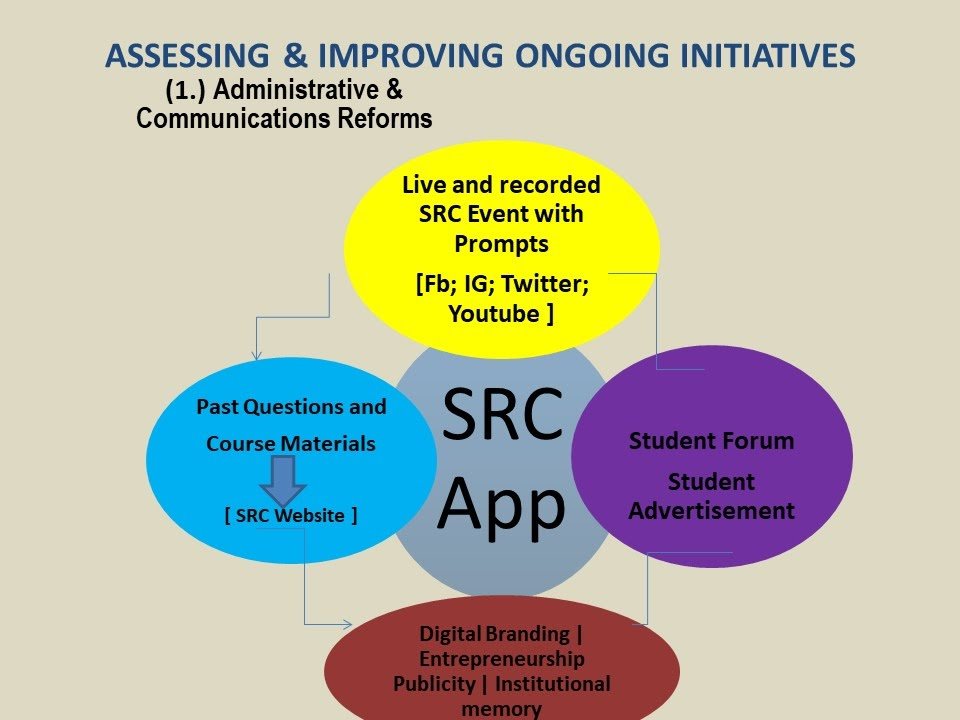
The application was hosted on a website created in 2018 under the domain (gijsrcapp.site). According to an old student blog , shortly after the website’s launch and the accompanying media spotlight, some students raised concerns about being unable to access or locate the app online. Archived records from the Wayback Machine show that the website was last captured on September 29, 2018. Budget documents reviewed during this investigation indicate that the development of the app cost students GHS 5,000.
Screengrabs from Wayback machine
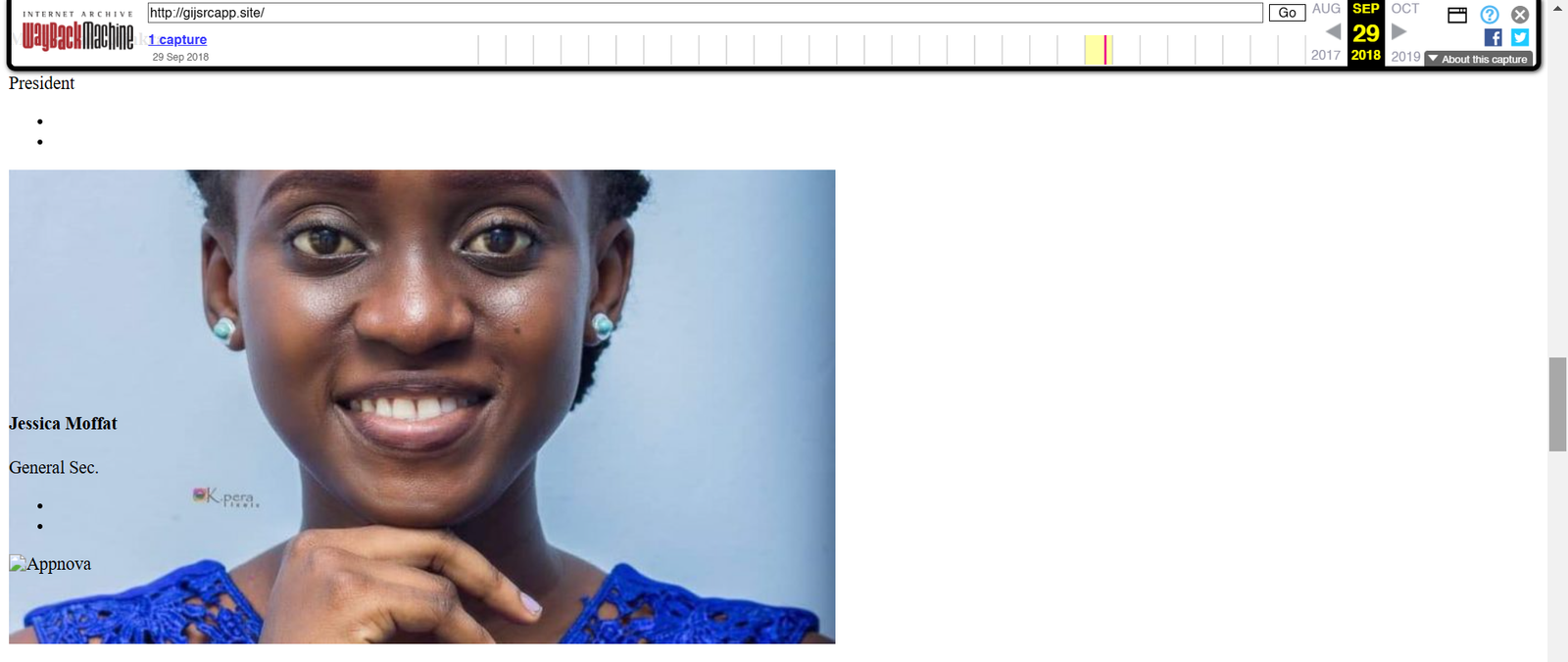
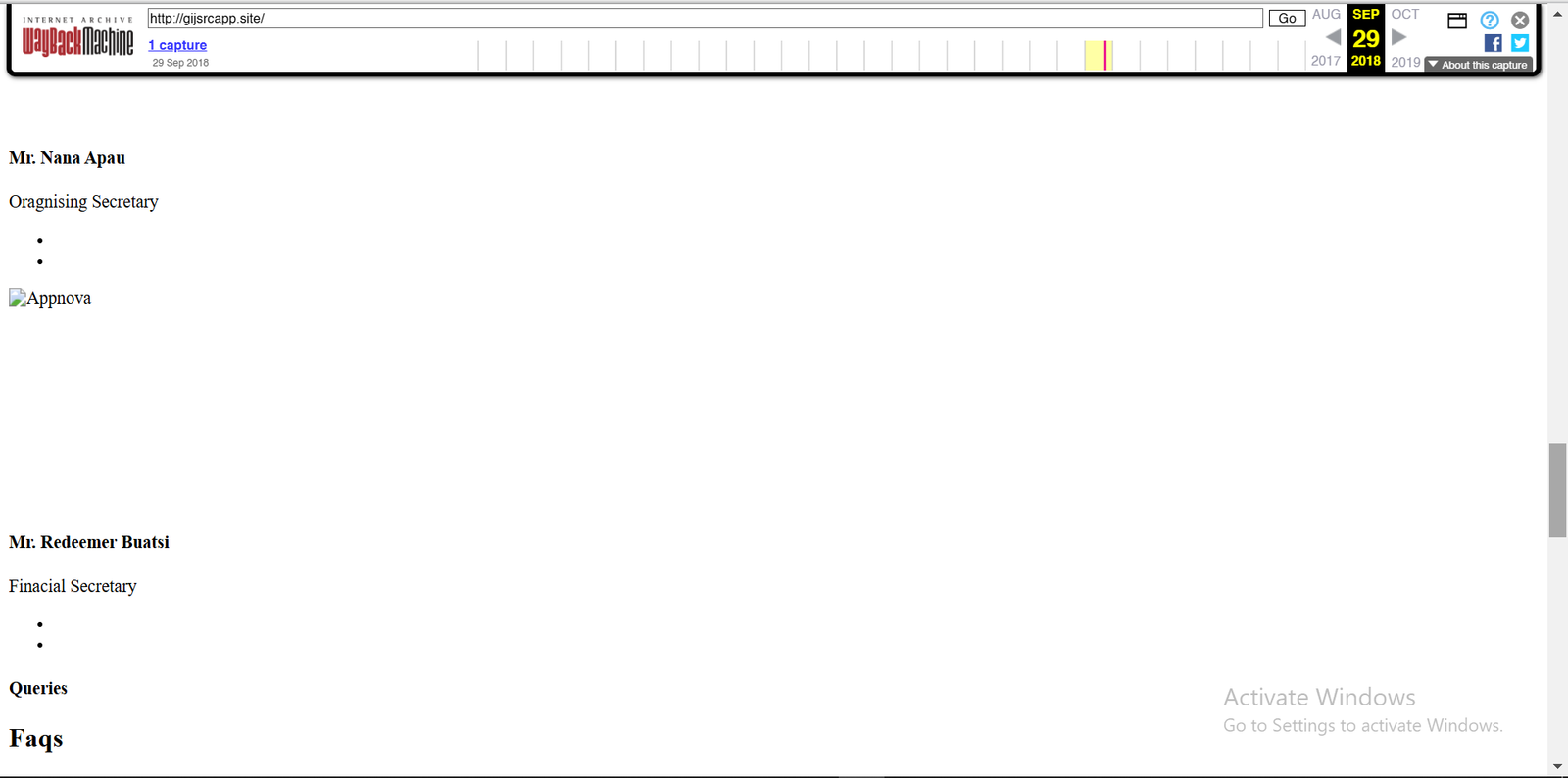
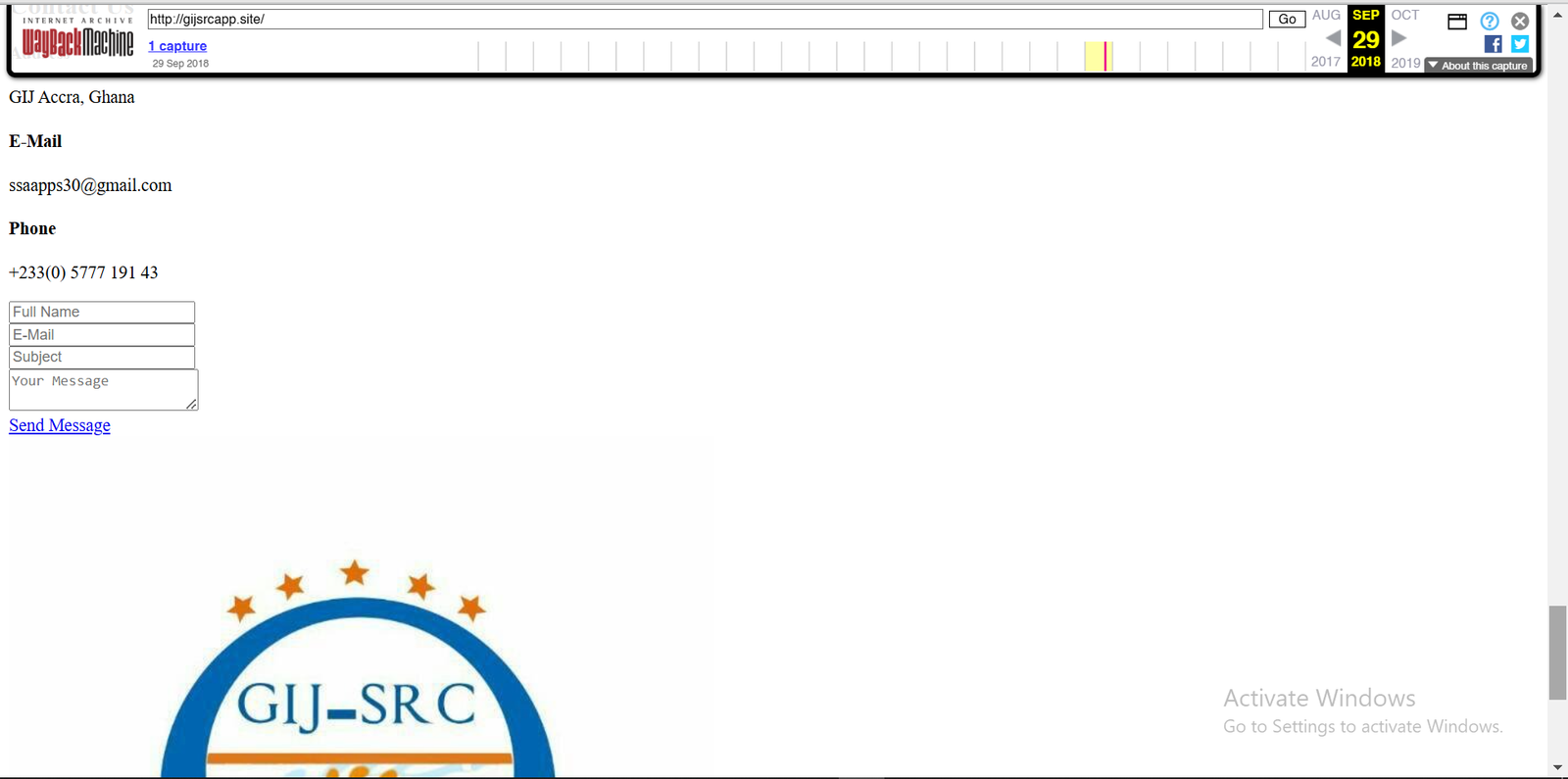
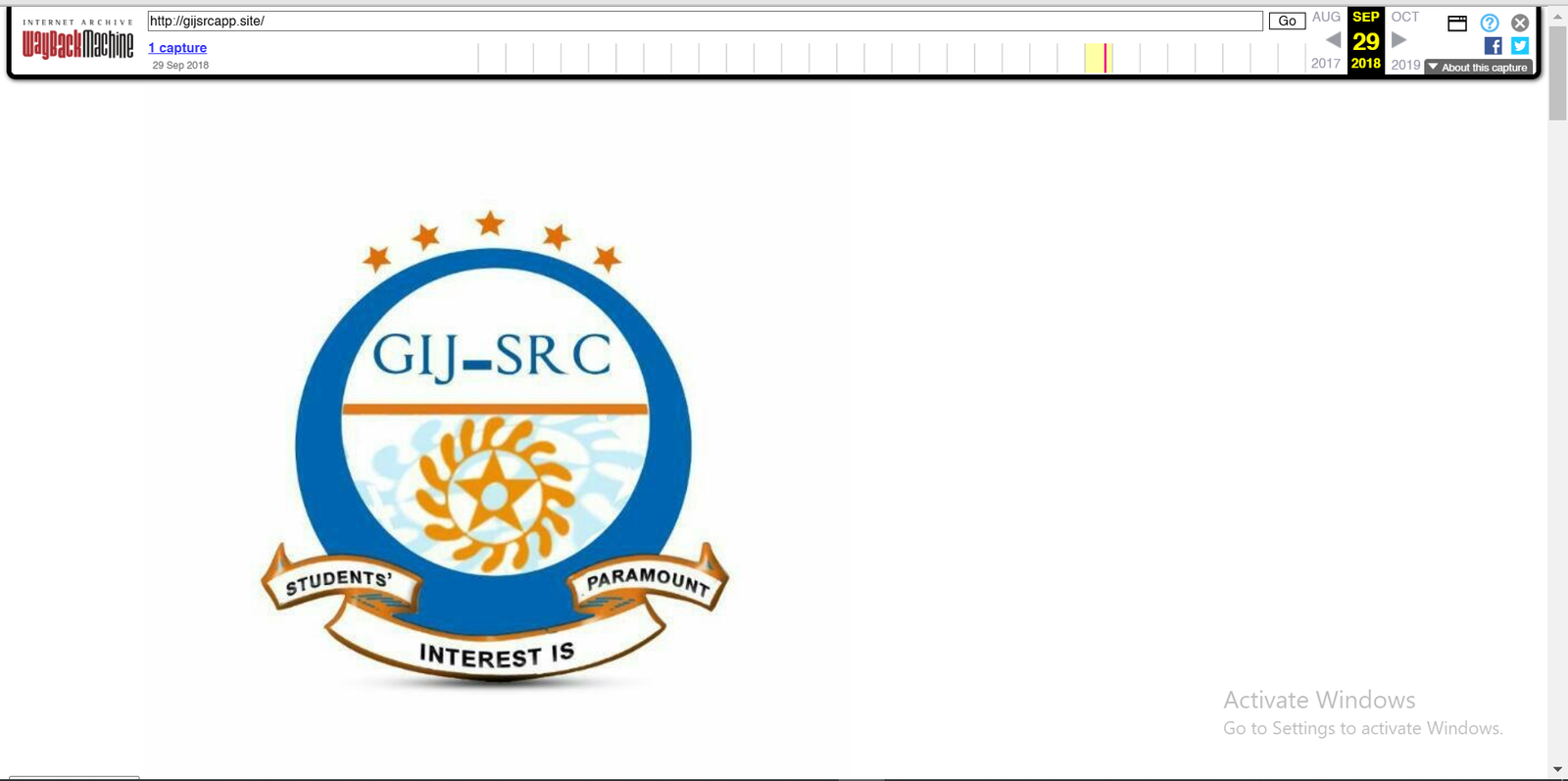
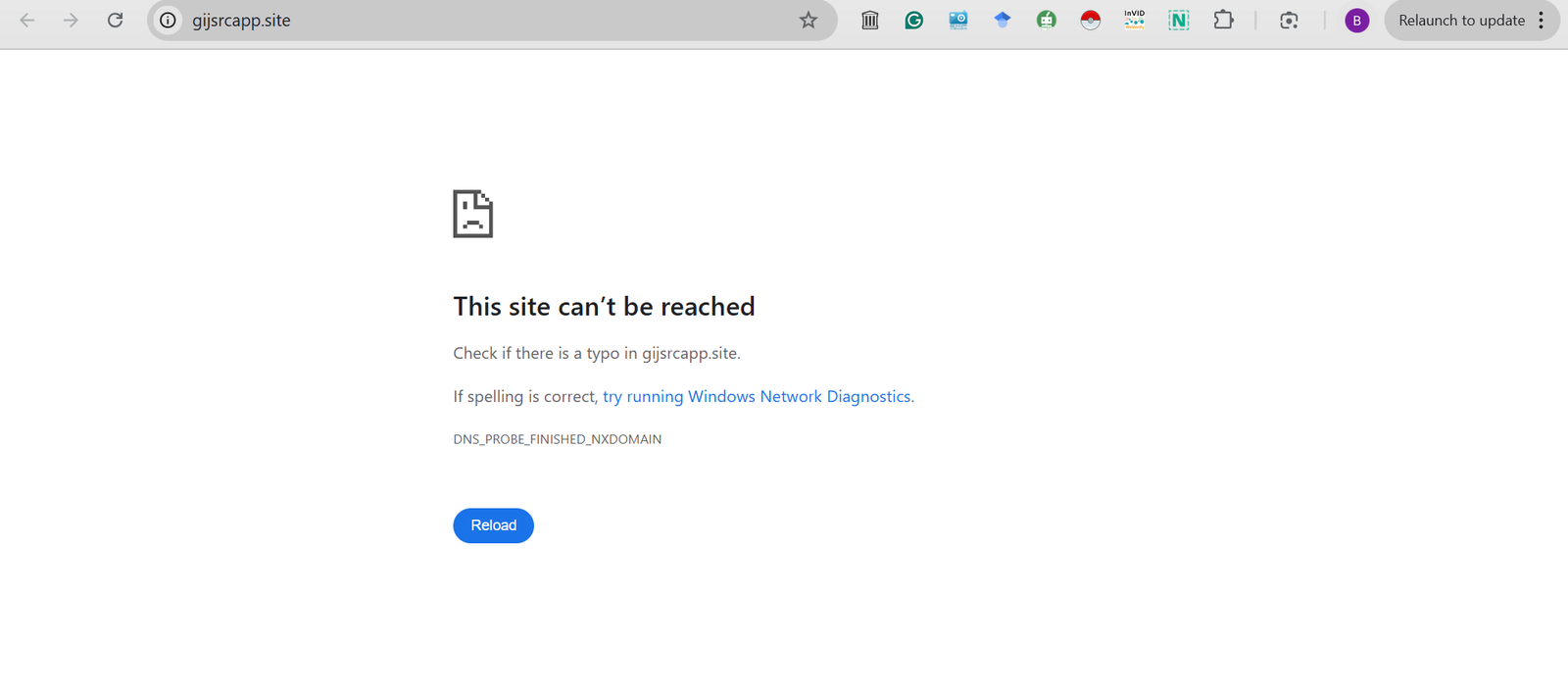
The application formed part of a bigger effort to digitise the SRC’s services. However, there is little documentation indicating whether the platform was maintained, updated or formally evaluated after its initial launch. Using WhoXY, an OSINT domain tracking and search tool, we found out that the website (gijsrcapp.site) that hosted the link to the app was created on 16th September 2018 and expired exactly a year after.
After a change in leadership, in 2019, when the Joseph Agbezuke led administration took office, the SRC application reappeared in the SRC budget, with GHS 2,000 earmarked for its development and maintenance, continuing student money investment in the digital dream despite its previous disappearance. According to The Reformer, an old student blog, ahead of the elections, the Joseph Agbezuke led administration on Radio GIJ promised students of repositioning the student council.
Although budget documents show an allocation of GHS 2,000 for an SRC application in 2019, our investigation found no verifiable evidence that the application was ever accessible to the public. WhoXY records however indicate that a website was registered under the domain name (gijsrcofficial.com) in December 2019 and expired exactly a year after.
After previous administrations had invested in some digital projects, the next administration, Nii Lantey Lamptey’s, introduced a website under the domain gijsrc.com, the same domain that had first been used in 2016-2017. Archived records show the domain was captured in 2018 and 2019, but the last functional version of the site appears to have been in 2017. Subsequent checks with WhoXY indicate that the domain may have been acquired by a foreign entity, as the website is now in Chinese. Budget records show that the website project under this administration was allocated GHS3,800, with scant documentation on its actual implementation. According to an old student blog, Authentic Newsroom, the Director of communication in that administration, Sefa Sedofia indicated that the website was a part of plans to build an official communication channel between the students and the leadership council. Archived records and online checks conducted as part of this investigation indicate no record of the website’s presence online.
The subsequent administration again attempted to revive the digital dream, using the same domain name (gijsrc.com) as its predecessor but at a cost of GHS5100. The project received significant publicity, promising students live updates and improved access to information. Despite this increased investment, using Wayback Machine, Unheard found out that the website under the Edem Vine led administration was short-lived.
Screengrabs from Wayback machine


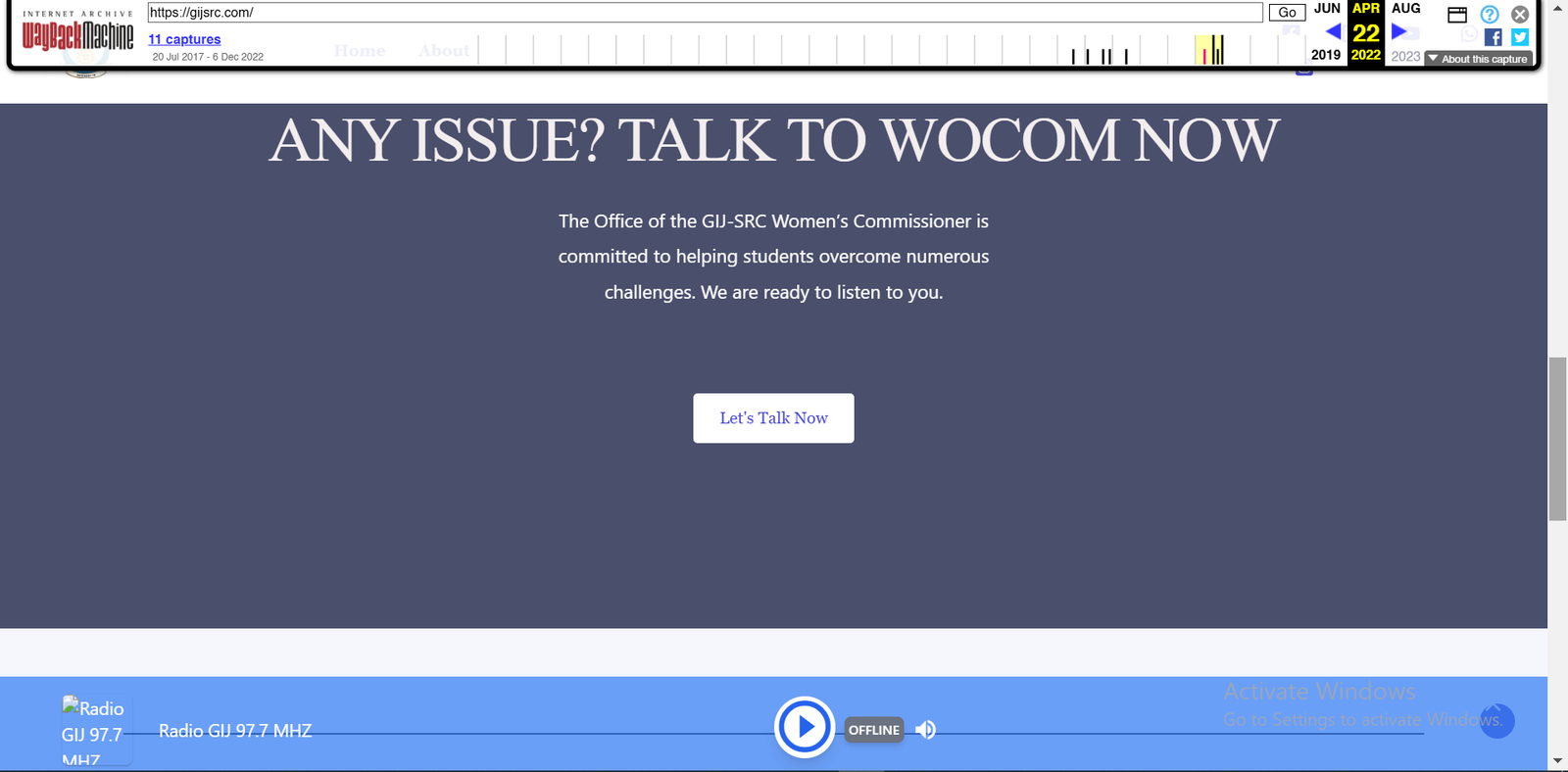
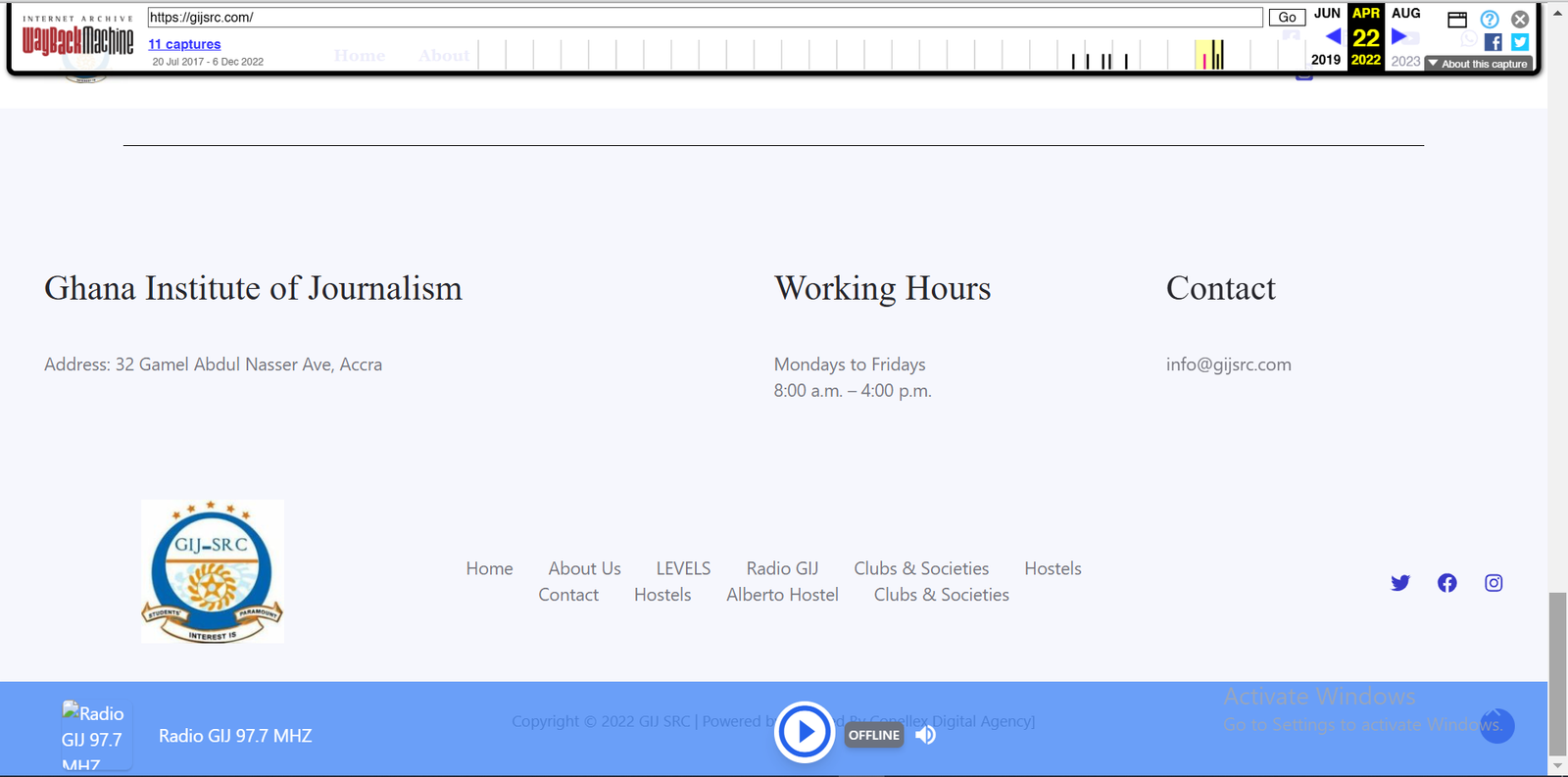
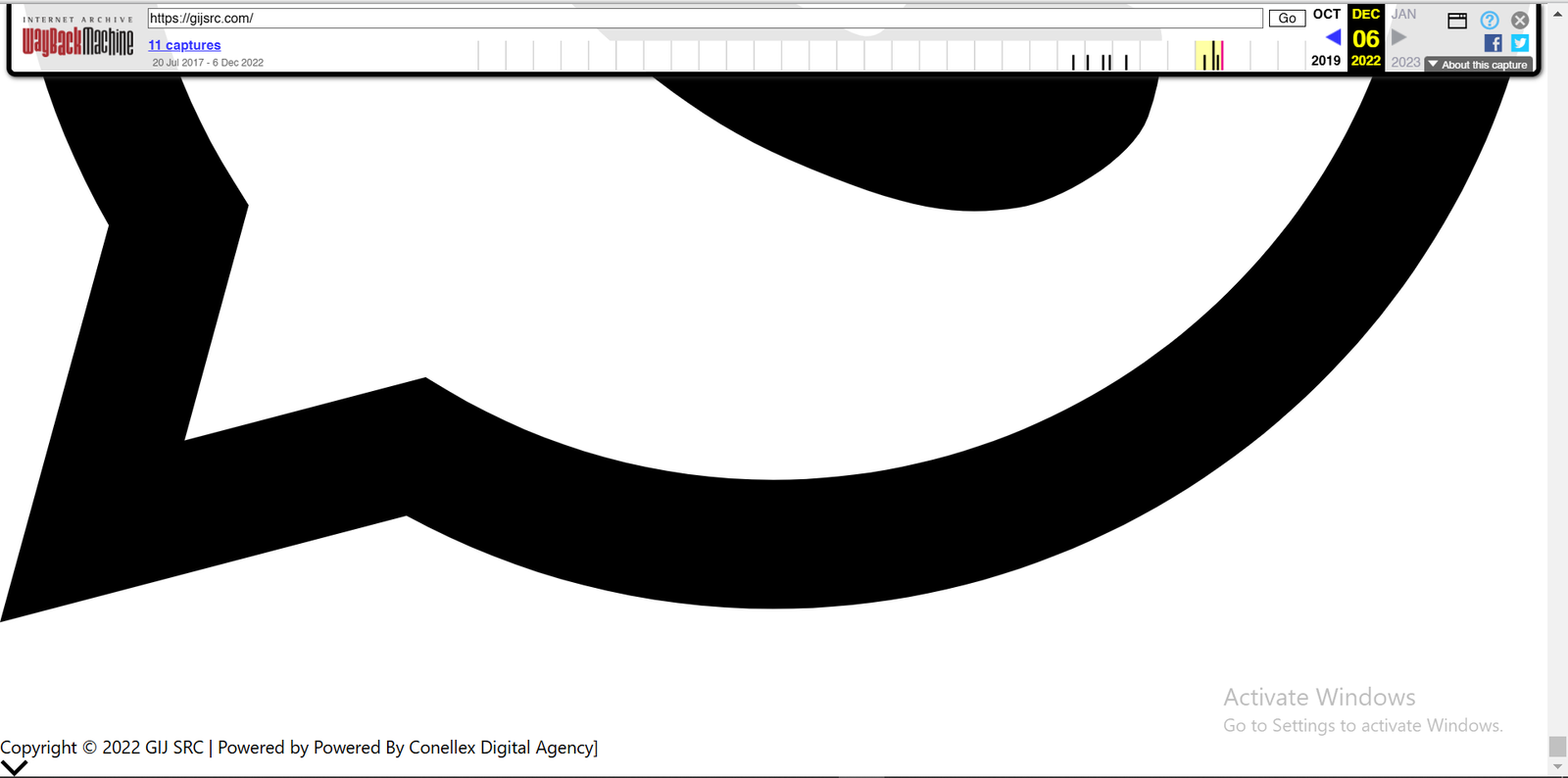
WhoXY shows that the website was created in December 2021 and expired a year after. However, using WayBack Machine, we found that the website was live in April 2022, and disappeared in December 2022. The website had features like SRC announcements, executive profiles, committee profiles, a slot for radio GIJ, clubs, halls and societies, and among others. Archived records indicate that the website was developed by an agency engaged by the Edem Vine administration.
Despite the short-lived revival in 2022, the project resurfaced in the student budgets two years later.
The administration that succeeded the Edem Vine-led leadership did not pursue the SRC’s digital agenda. However, the subsequent, Fati Ali-led administration made an attempt to revive the vision, offering renewed hope to students like Ama. Under this administration, GHS2,000 was committed to the project.
What Website Experts Say About the SRC’s Digital Projects

To better understand what these repeated investments should have delivered, we spoke to Dennis Gyamfi Bediako, CEO of EnspireFX Websites, an SME web design company with close to a decade of experience.
He explains that a website can either be built from scratch or developed using web builders, depending on the scope and resources available.
“Looking at the amounts allocated in 2018 and 2019, they are quite interesting, especially when you consider the dollar rates at the time. For a group like an SRC, a standard website should cost around GHS2,000 to develop,” he said.
But beyond cost, he points to a more worrying situation.
“The bigger problem here is not just funding, but inexperience. These projects are meant to serve institutions, not individuals, yet over the years, ownership appears to have been tied to specific administrations rather than the SRC as a continuous body,” he said.
He adds that maintenance is critical, typically costing about GHS1,000 annually.
“Websites function like post office boxes, if they are not renewed, they expire, and someone else can take them over,” he noted, warning that without institutional backing and proper continuity, such platforms are unlikely to survive beyond a single administration.
For Ama, these revelations explain a frustration she never quite understood at the time.
Despite the investments, nothing about how students accessed information seemed to change. Over nearly a decade, the project passed through multiple administrations, with repeated spending of students’ money on applications and websites, many of which were short-lived or left little trace of sustained public use.
Part II of this investigation looks at how the digital dream of the SRC shifted to a free WordPress platform, the role of the agency behind the 2021 website and its re-engagement in subsequent years, responses from the student leaders, what other university SRCs are doing and what has become of the project’s records.